Analogue and filter calculators
Move from RC timing and filter corner checks into op-amp gain and unit conversions without treating each calculation as an isolated formula.
Choose from the design task
Use these tools for first-pass analogue calculations, then review loading, tolerances, bandwidth, and device limits as the circuit becomes less ideal.

RC Time Constant Calculator
Calculate tau and capacitor voltage during charge or discharge.
When to use it: Use for RC delays, reset timing, discharge checks, and time-domain capacitor behaviour.
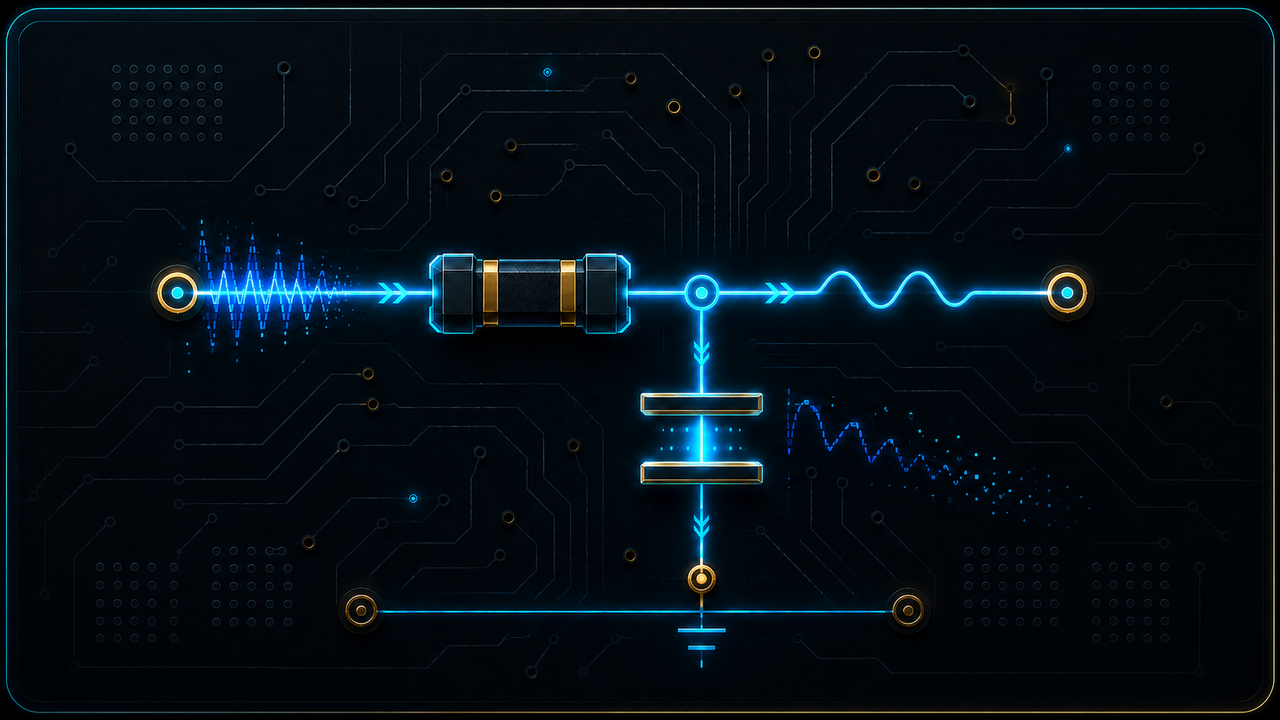
RC Low-Pass Filter Calculator
Solve cutoff frequency, resistance, capacitance, and time constant for a first-order low-pass filter.
When to use it: Use when a resistor and capacitor are intended to attenuate high-frequency content or smooth a signal.
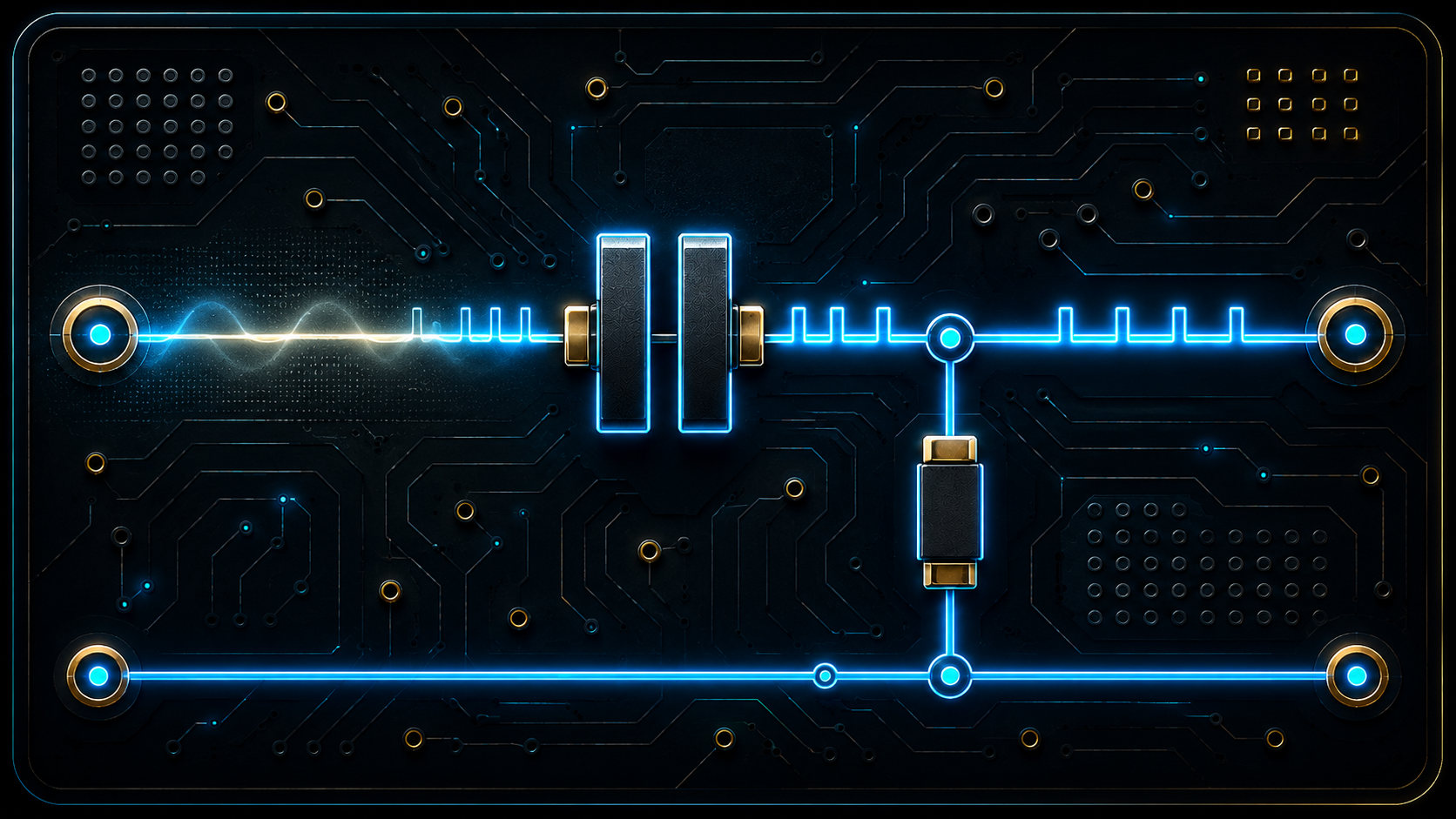
RC High-Pass Filter Calculator
Solve high-pass cutoff relationships for a first-order RC network.
When to use it: Use when a series RC network is intended to attenuate DC or low-frequency content.
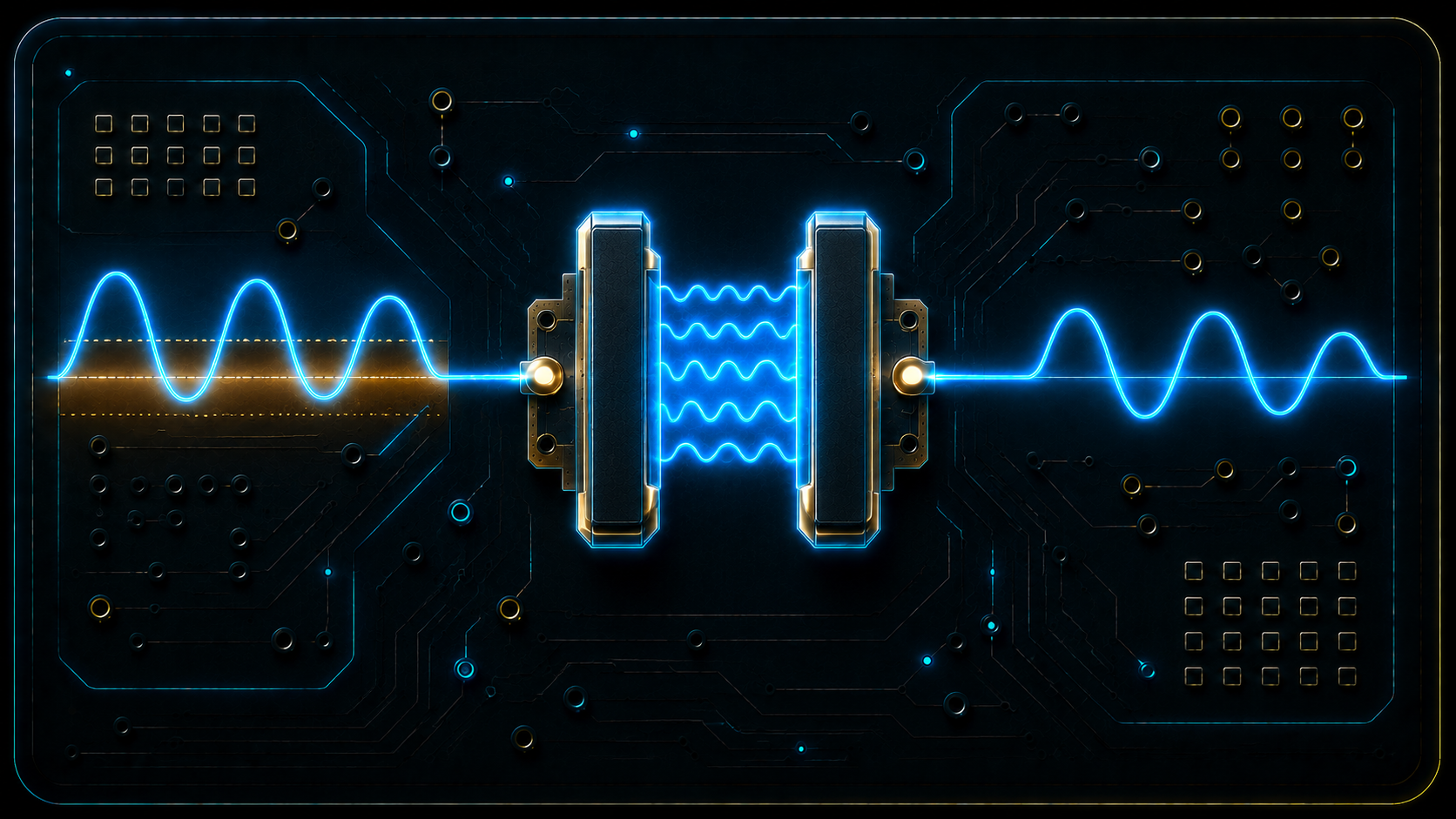
AC Coupling Capacitor Calculator
Size a coupling capacitor from cutoff frequency and the effective resistance seen by the capacitor.
When to use it: Use when a capacitor blocks DC between stages while preserving the wanted AC signal band.
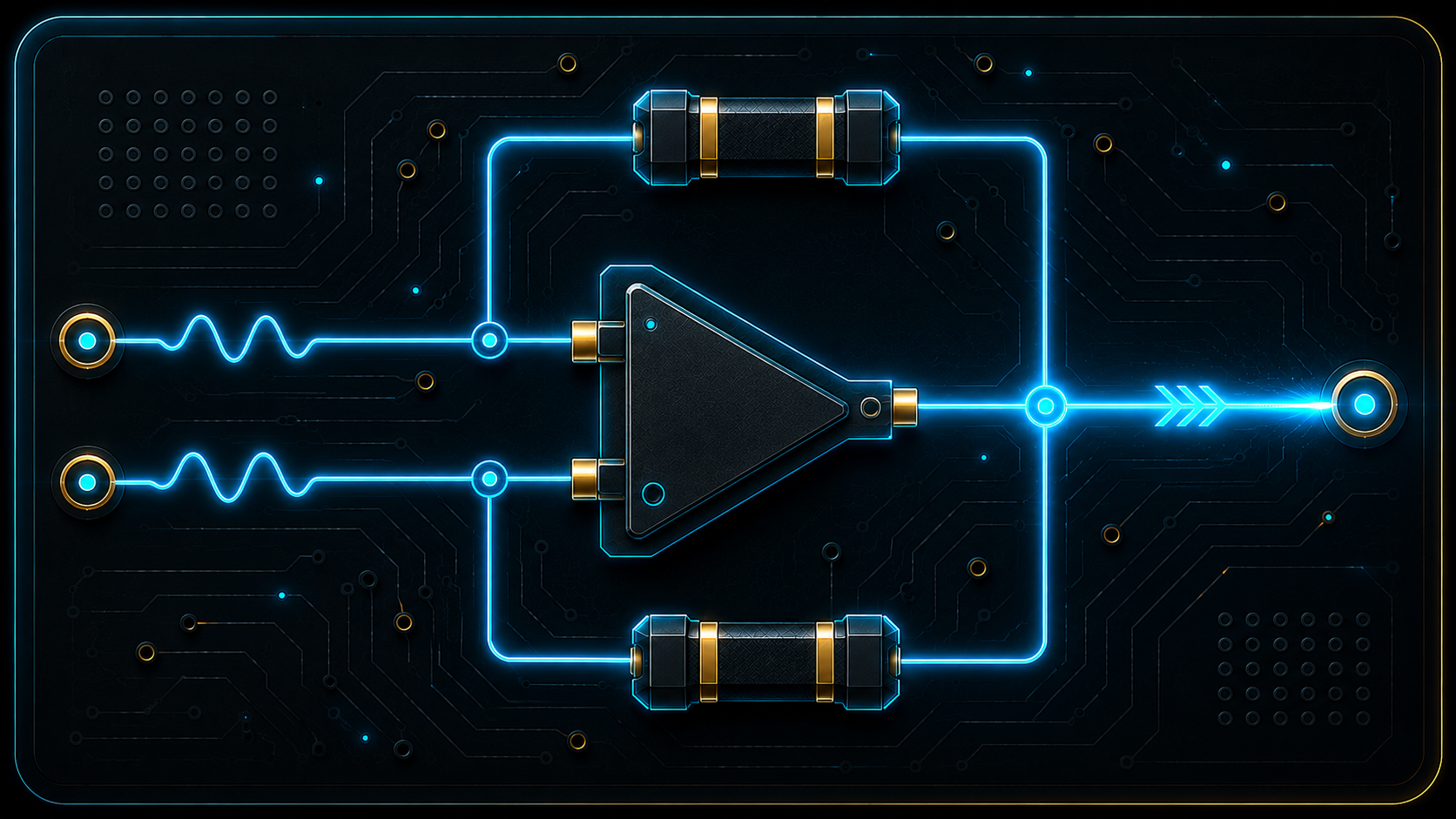
Op-Amp Gain Calculator
Calculate inverting and non-inverting gain, resistor values, dB gain, and ideal output voltage.
When to use it: Use for first-pass ideal gain and resistor-ratio checks before bandwidth, swing, noise, and stability review.
Common analogue workflows
Follow these paths when a single RC or gain result is only the start of the design check.
RC delay or discharge check
First-order filter corner
AC-coupled amplifier input
Engineering explainers
Use these guides when the calculator result needs design context before it becomes a schematic decision.
RC cutoff frequency and RC time constant
Understand the same RC pair in time-domain and frequency-domain terms.
AC coupling capacitor sizing
Choose a coupling capacitor from cutoff frequency and effective resistance.
Op-amp gain resistor selection
Choose feedback resistors while checking tolerance and real op-amp limits.